Designing Fanvue's Growth Hacking Engine
Created Fanvue's Growth Hacking team with one of the company's co-founders. Ran 138 experiments with a 29.7% win rate, about three times the ~10% typical at Booking, Netflix and Google.
Overview
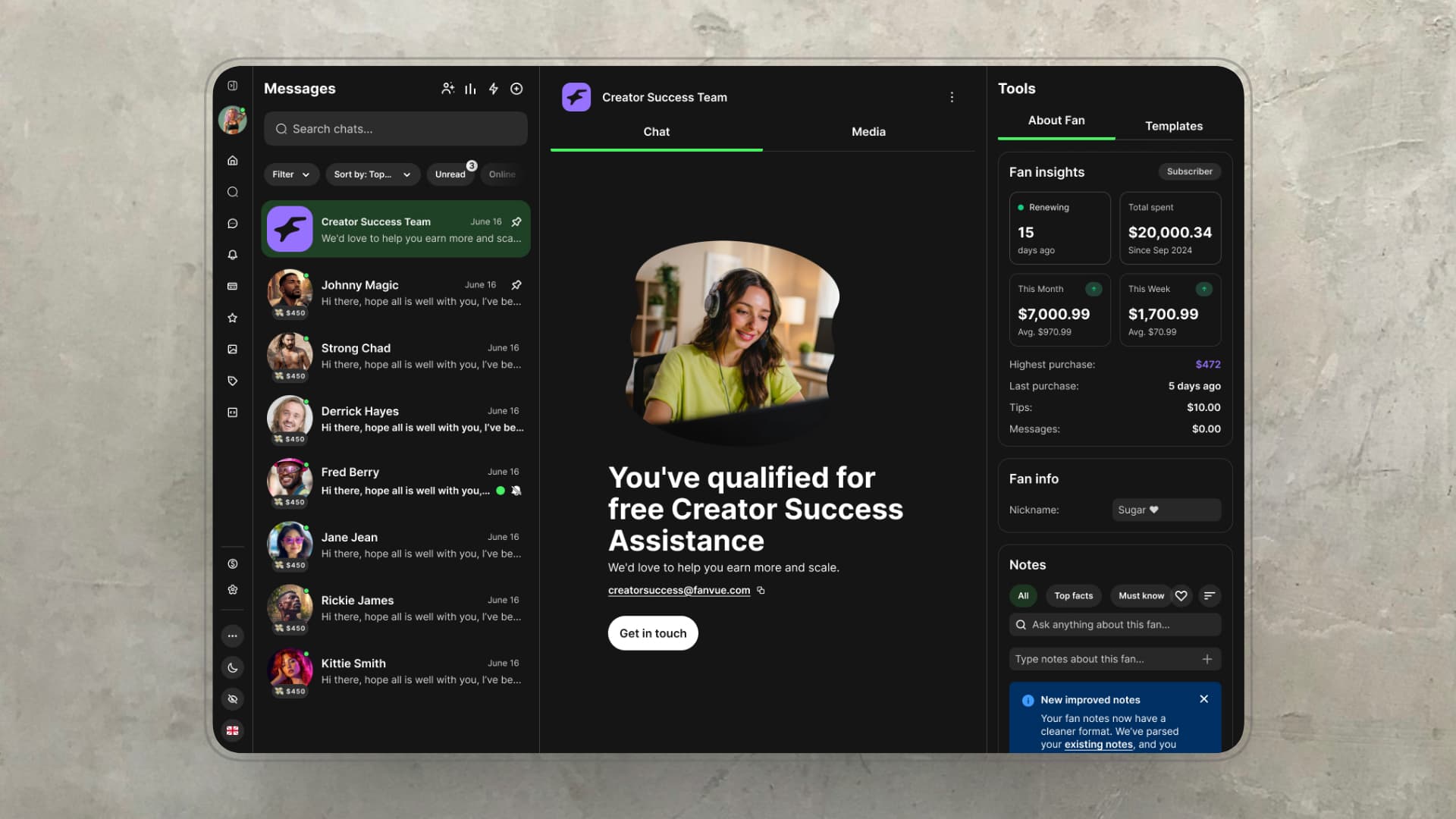
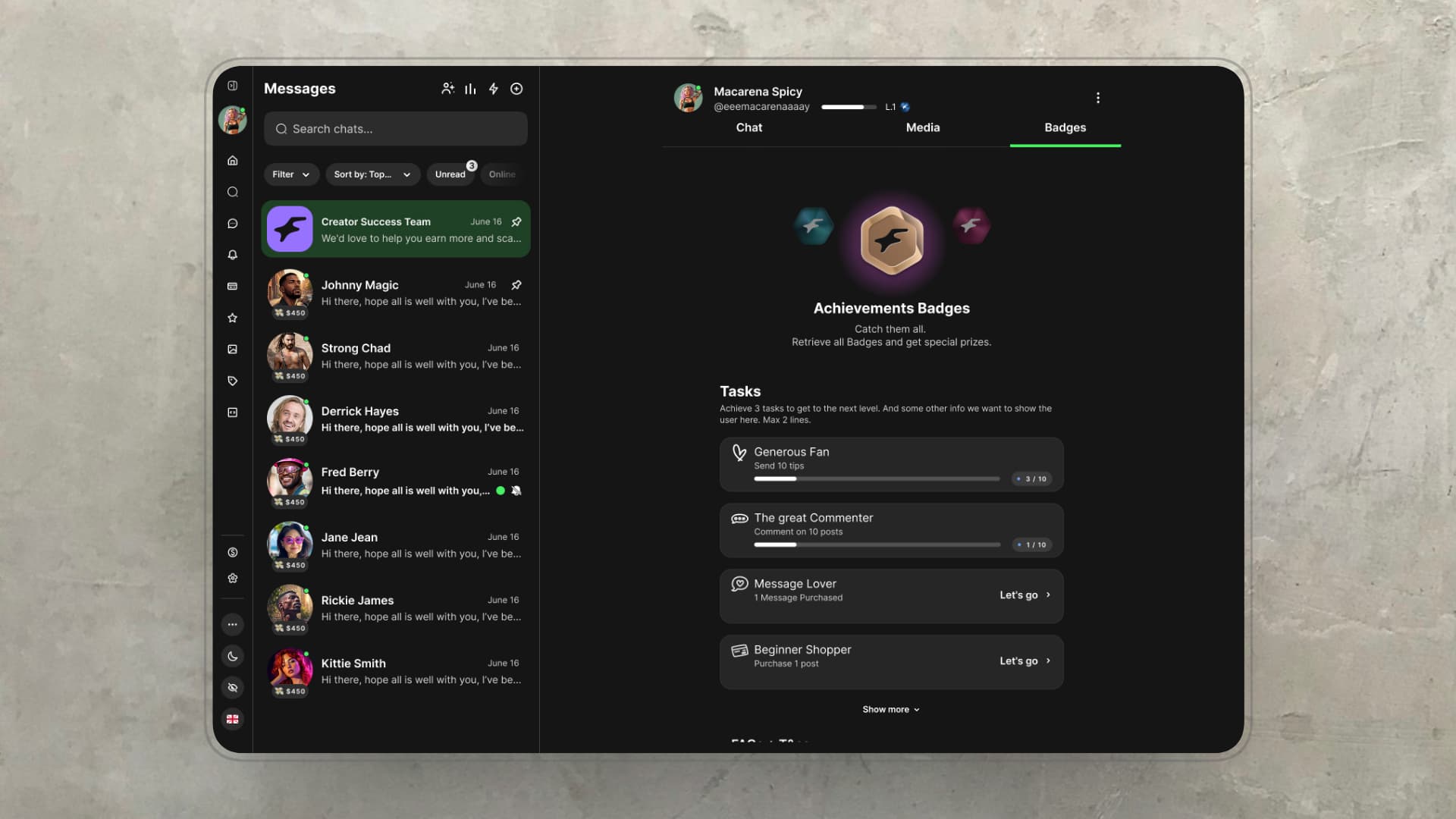
Fanvue is a creator economy platform headquartered in London: paid exclusive content, AI-powered creator tools, and a rapidly growing compliance surface.
I co-founded the Growth Hacking team with a company co-founder, building the function from a team of two, while Fanvue scaled acquisition, conversion and monetisation at once.
There was no structured experimentation: creator drop-offs weren’t understood or prioritised, and design validation was often unclear.
Design, ship, and validate growth experiments that inform product and monetisation decisions.
- Identifying high-impact growth opportunities across the funnel
- Translating hypotheses into testable design experiments
- Designing, shipping, and validating experiments with measurable outcomes
- Partnering closely with Product, Engineering, Marketing, and Data
How This Case Study Is Structured
A selection of the design-led growth experiments I shipped at Fanvue, out of the 100+ I designed. The focus is on decision-making and impact, not final screens. Each experiment includes:
- The hypothesis behind the change
- What was tested
- My design contribution
- The outcome or learning
Creator Onboarding Funnel Optimisation
Context
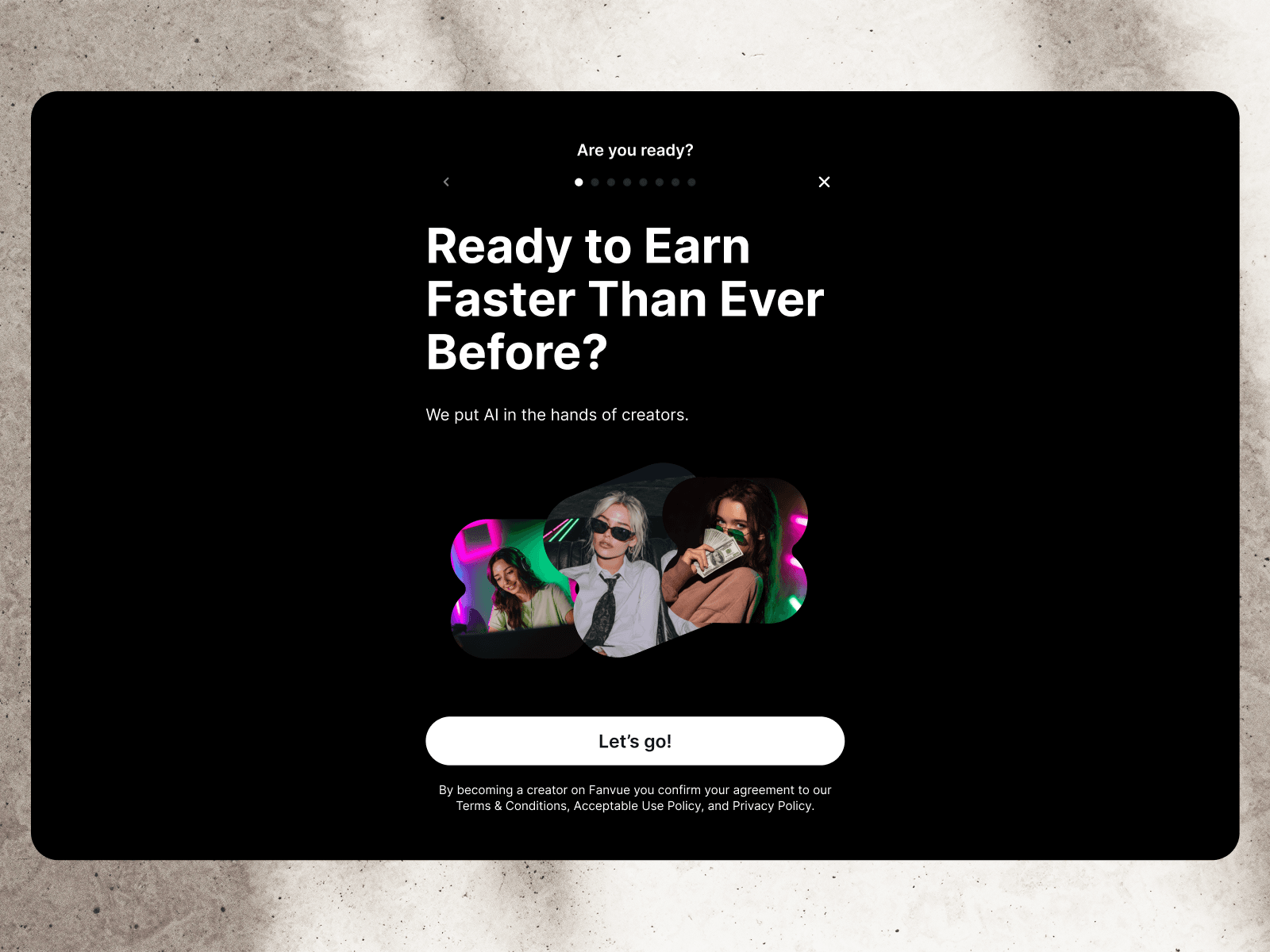
Becoming a creator is Fanvue’s most critical activation moment. The funnel had significant drop-off across multiple steps, costing creator supply.
Hypothesis
If we reduce confusion, perceived risk, and commitment at each step, more users complete onboarding.
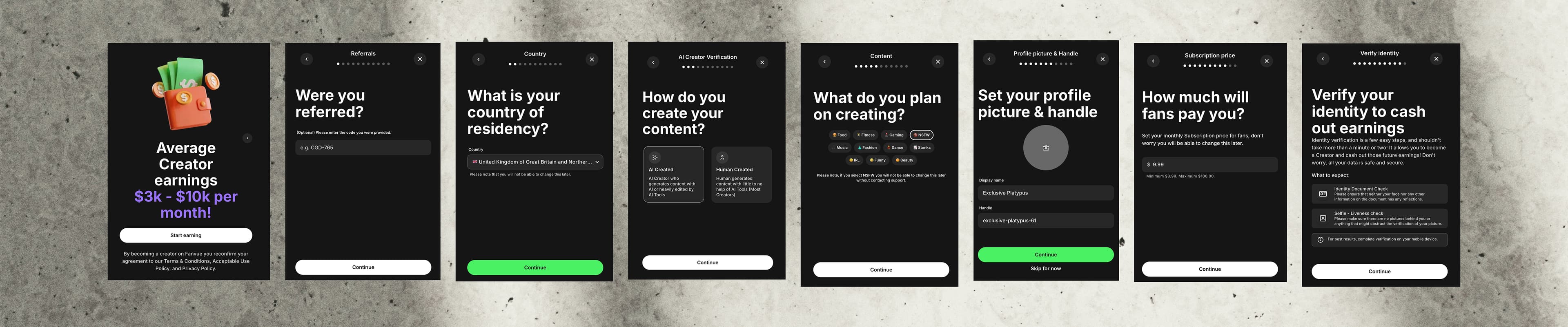
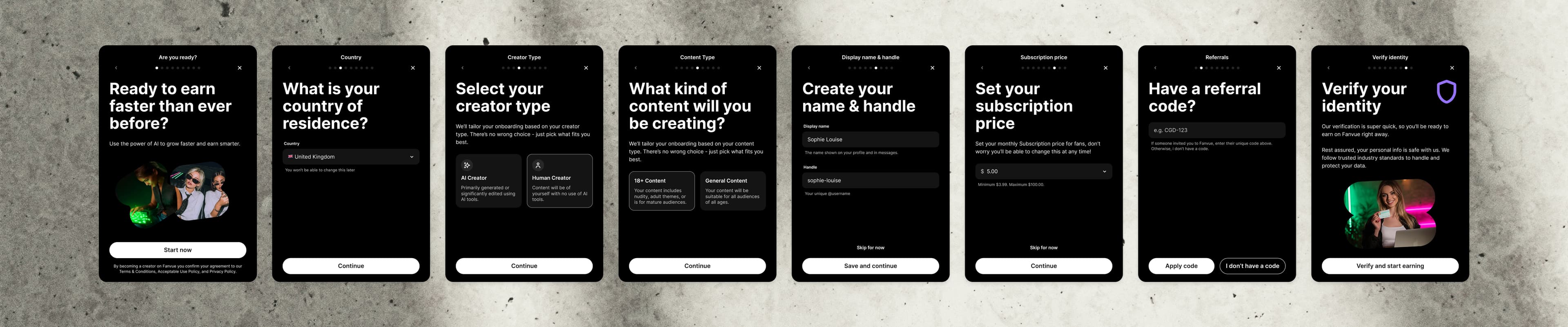
We changed the step order and then ran a series of targeted step-level experiments within the new onboarding flow, focusing on the highest drop-off and risk points.
AI Creator Declaration Step
Problem
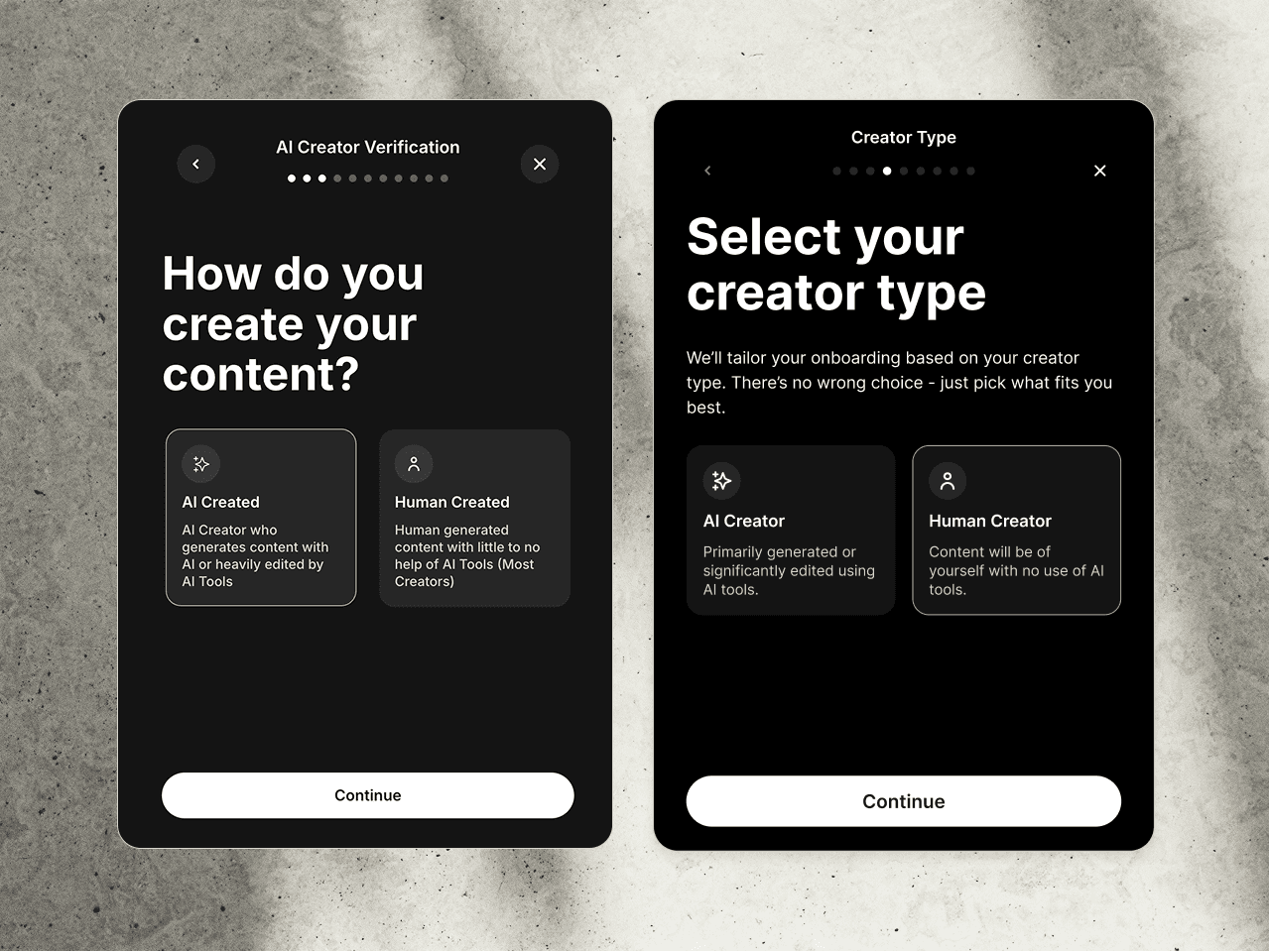
Creators were confused about whether they qualified as AI creators, leading to hesitation and misclassification.
Change
Clarified copy. We made it a binary decision. The person/creator is either a real person or was created using digital tools.
Content Type Selection Step
Problem
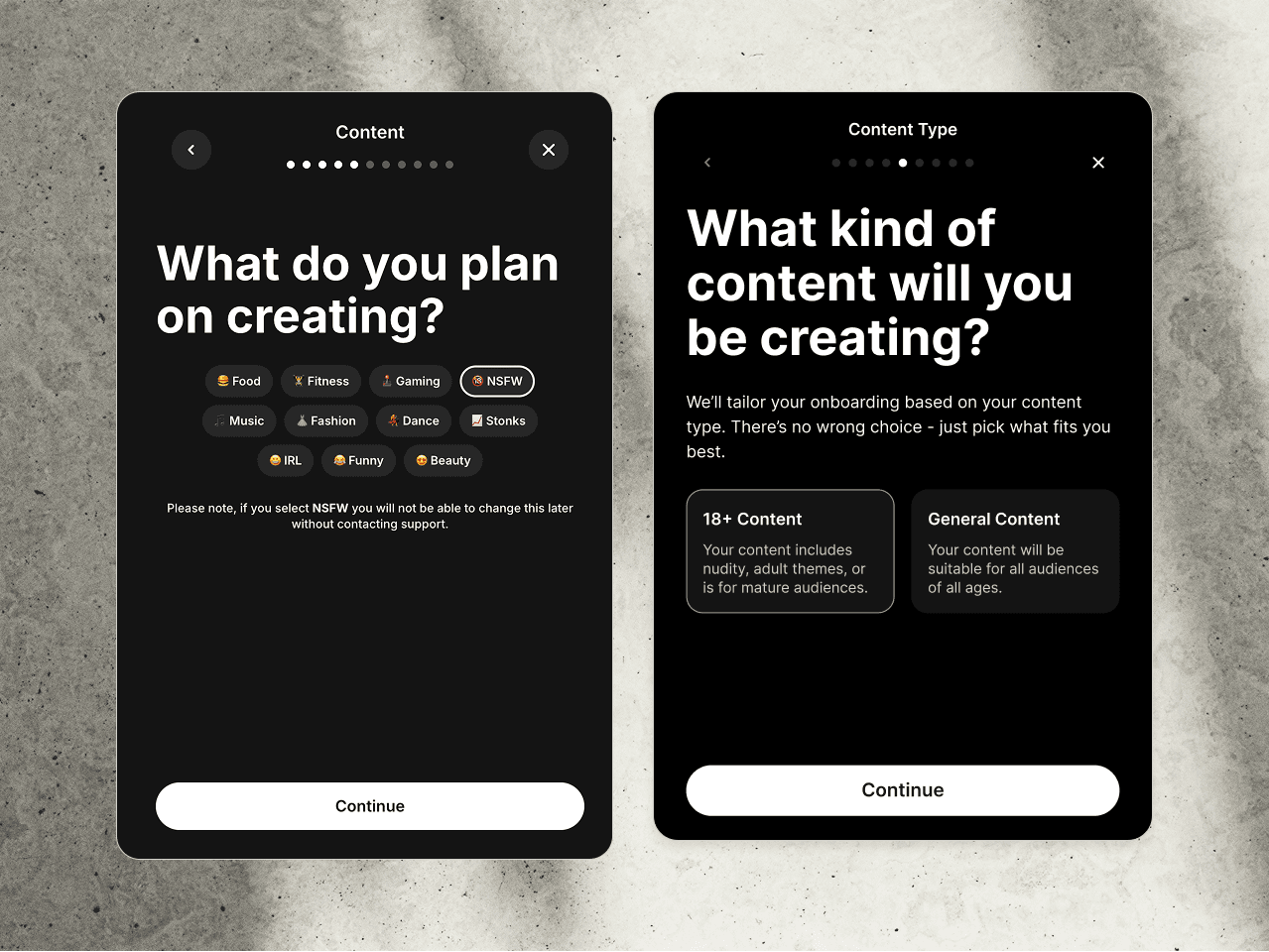
Creators struggled to identify their content type, weakening discovery and monetisation alignment downstream.
Change
Minimised content categories to a binary decision. The most important thing for our system and tagging creators is to know if a creator creates adult content or not.
Profile Picture Requirement Removal
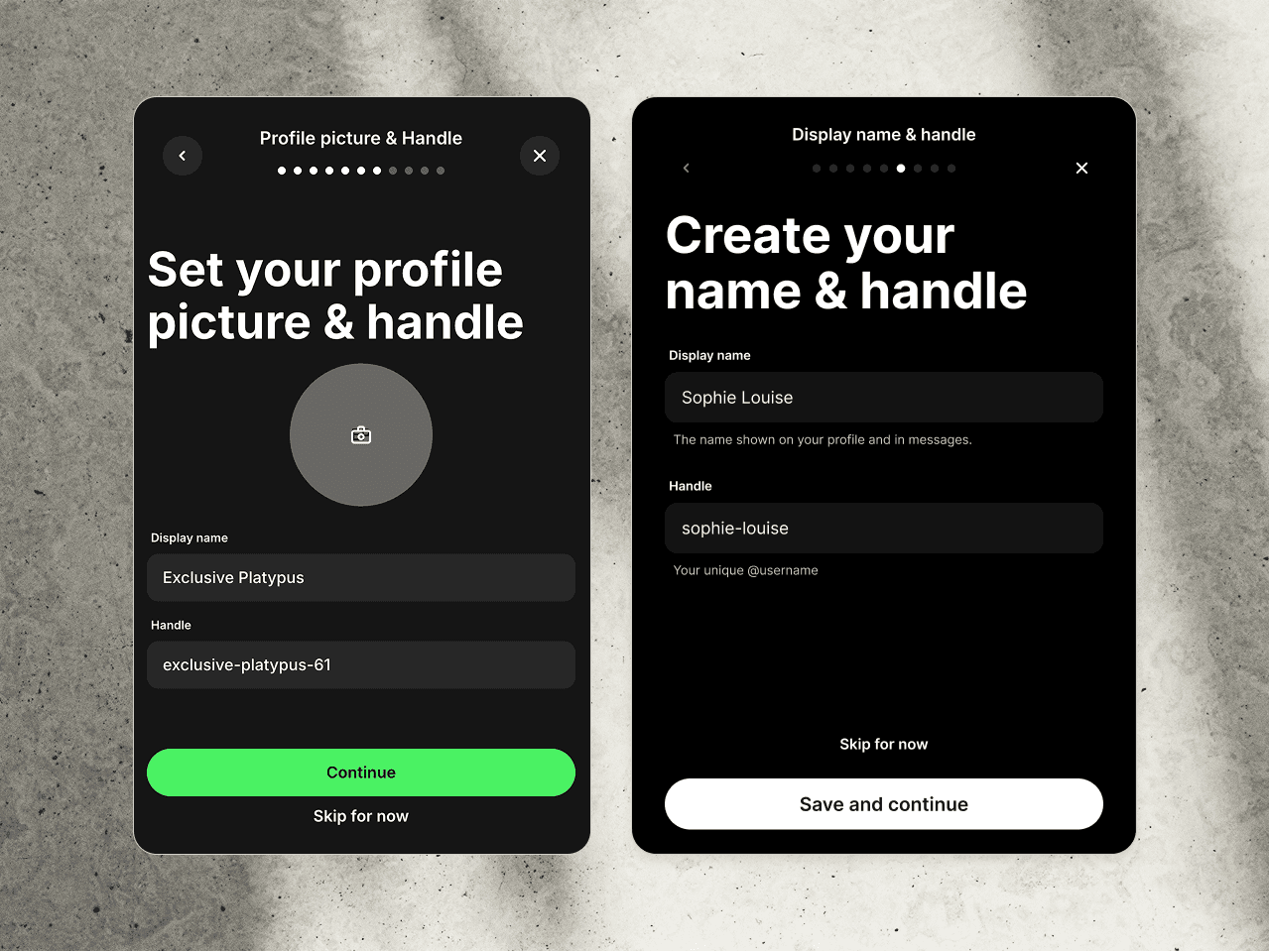
- No negative impact on downstream “Become a Creator” conversion.
Problem
Requiring a profile picture during handle creation introduced unnecessary friction early in the onboarding flow.
Change
Removed the mandatory profile picture requirement from the handle creation step.
Verify Identity (KYC Entry)
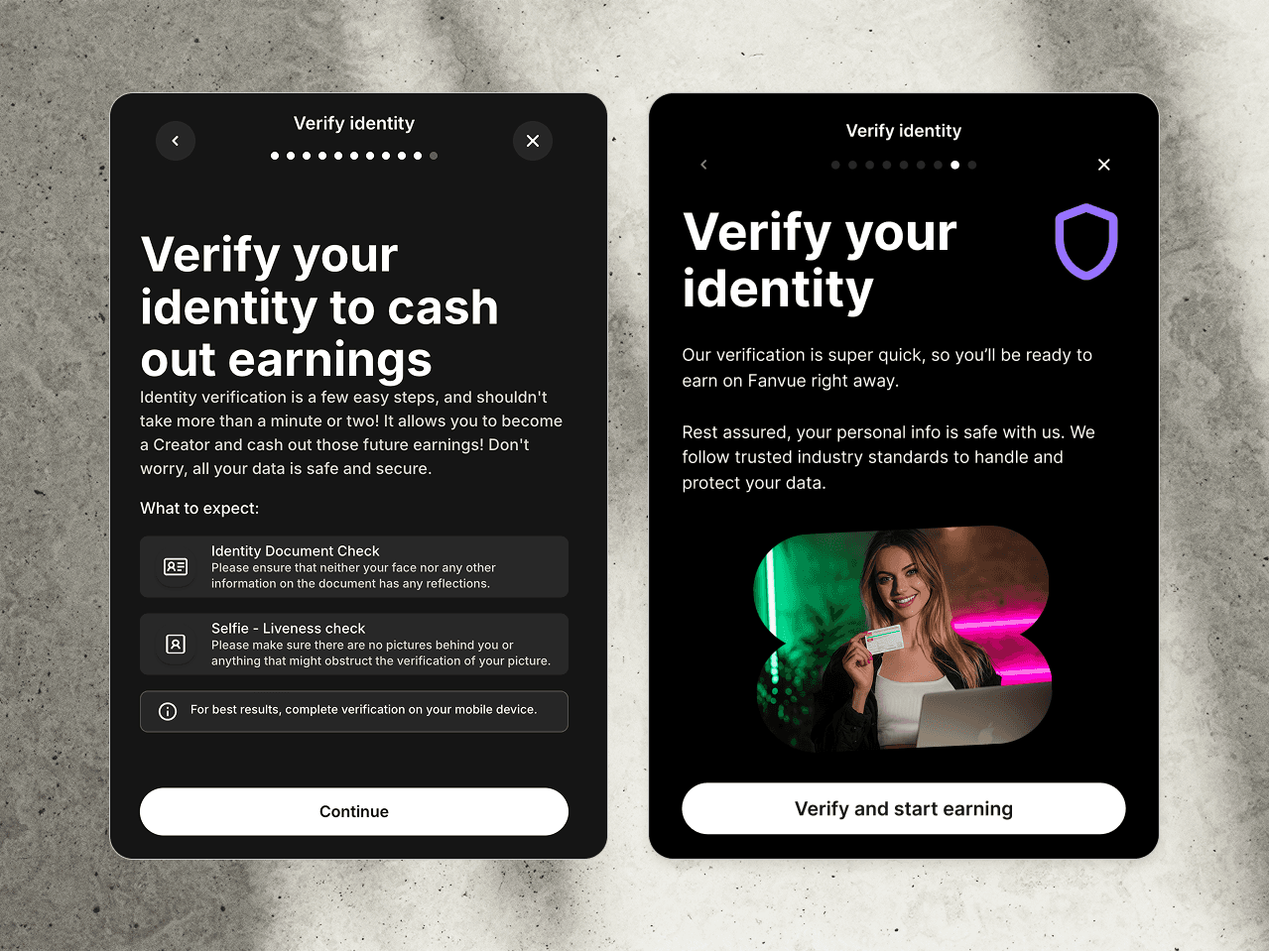
- Statistically significant; exceeded target.
Problem
Creators perceived identity verification as risky and time-consuming, leading to drop-off before starting.
Change
Reframed the step with clearer trust signals, simplified copy, and reassurance around speed and data safety.
Subscription Price Setup
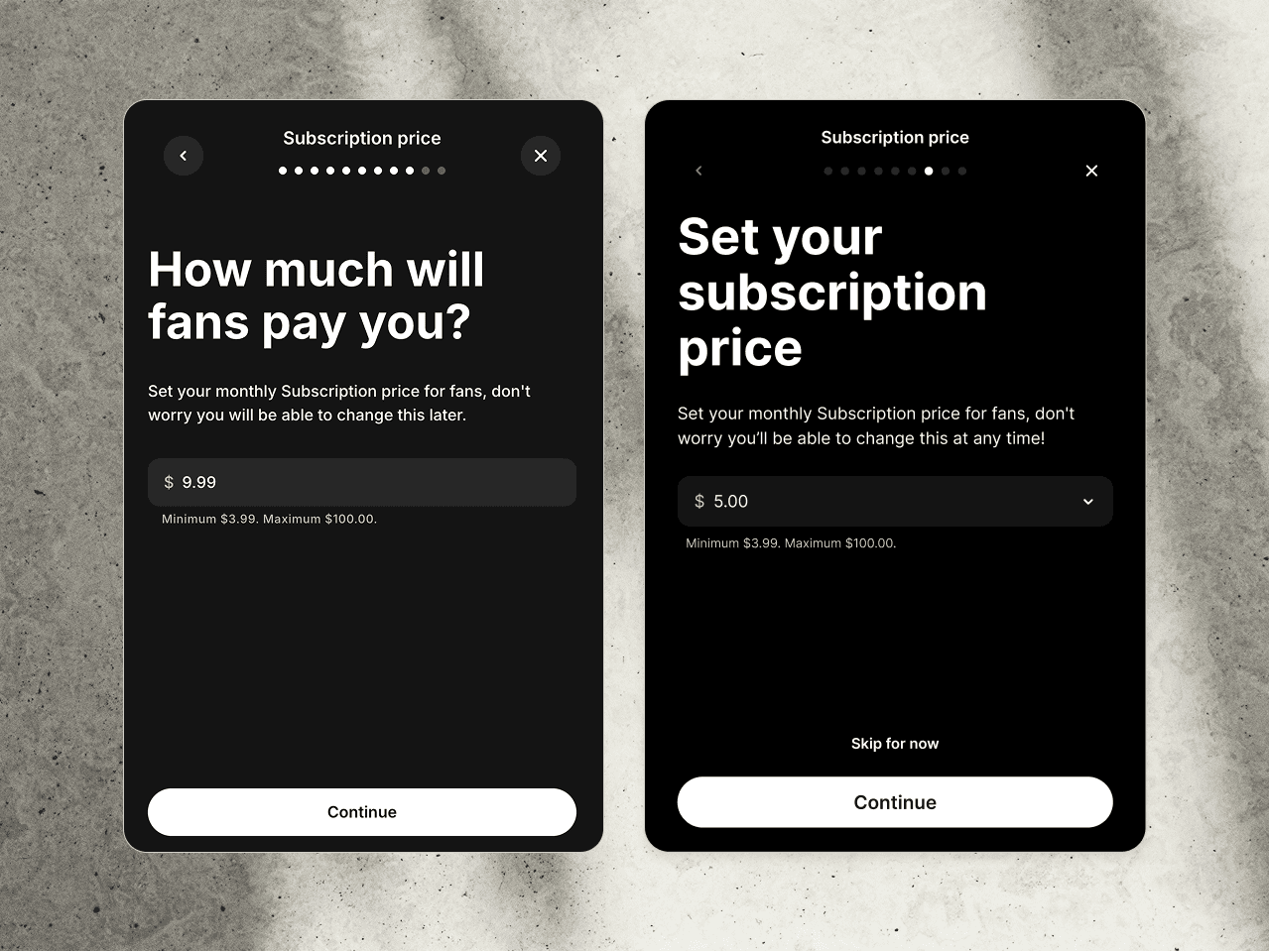
- No negative impact on downstream conversion.
Problem
Creators hesitated when asked how much fans would pay them. Does this include tips, sales, or different subscription types?
Change
Improved copy clarity and positioned pricing as adjustable later, reducing perceived commitment risk.
Referral Code Placement
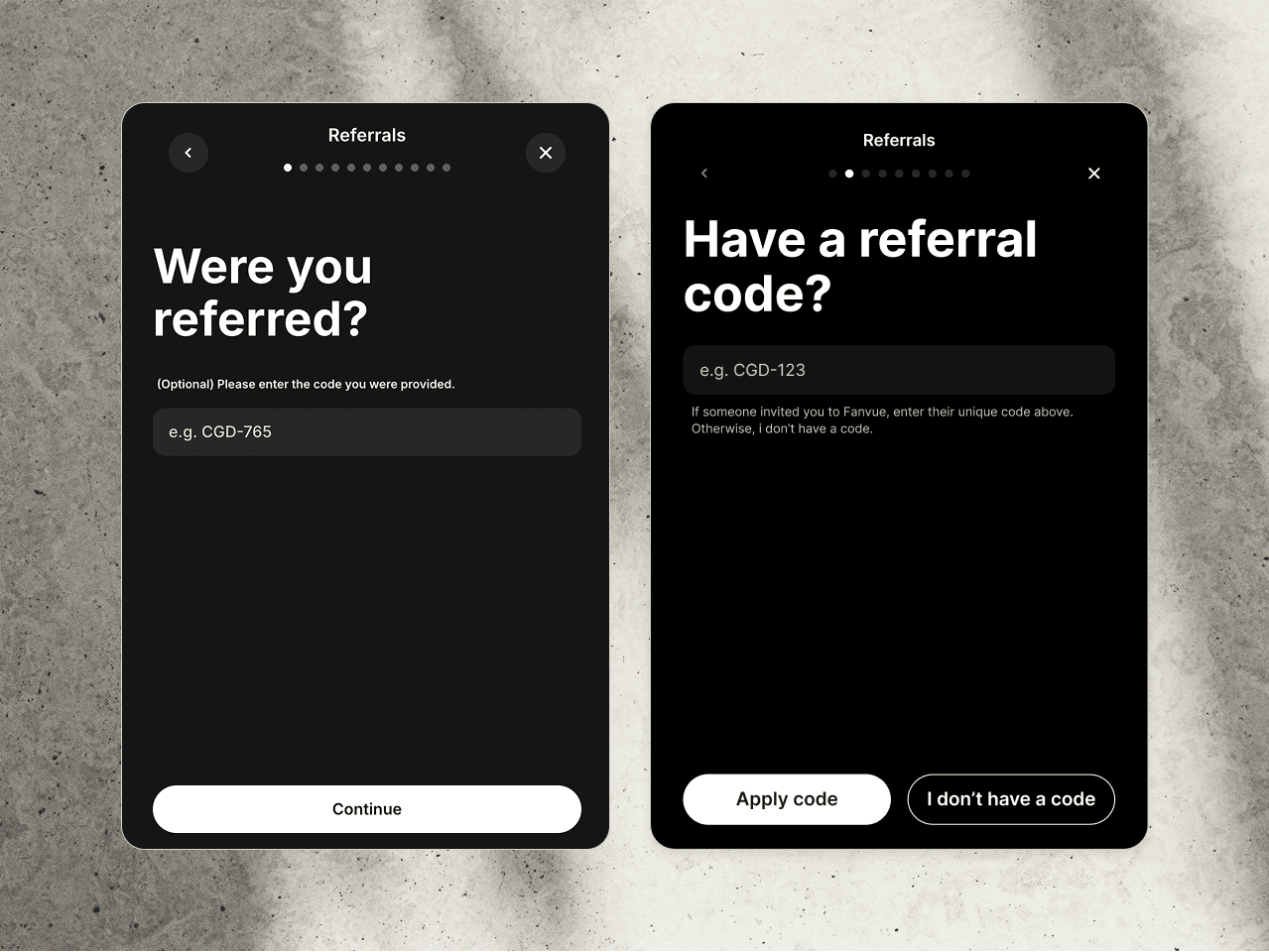
- Neutral to positive impact on onboarding completion.
- No measurable downside to referral usage.
Problem
Introducing the referral code too early distracted creators from completing onboarding.
Change
Moved the referral code entry later in the flow and reduced its visual prominence.
Upsell Bundle After Subscription
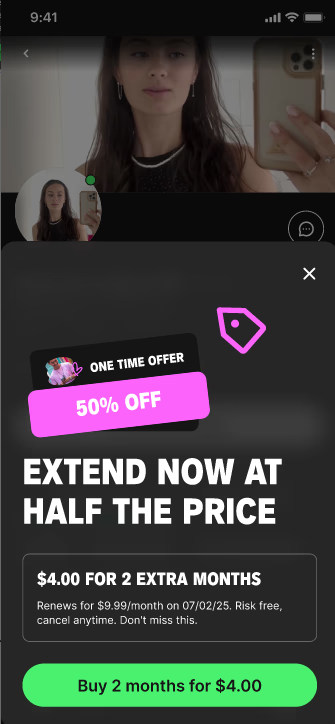
- No negative impact on initial subscription completion.
Context
Users who had just subscribed showed high purchase intent, but the flow ended immediately after confirmation.
Hypothesis
If we upsell a bundle immediately after subscription, users will upgrade without hurting core conversion.
Change
- Introduced a post-subscription upsell state
- Framed bundles as a special offer
- Kept the upsell optional to avoid pressure
Why it mattered
Expansion revenue is best captured after commitment, not before. LTV up, subscription experience preserved.
Moving Bundles into the Subscribe Dialog
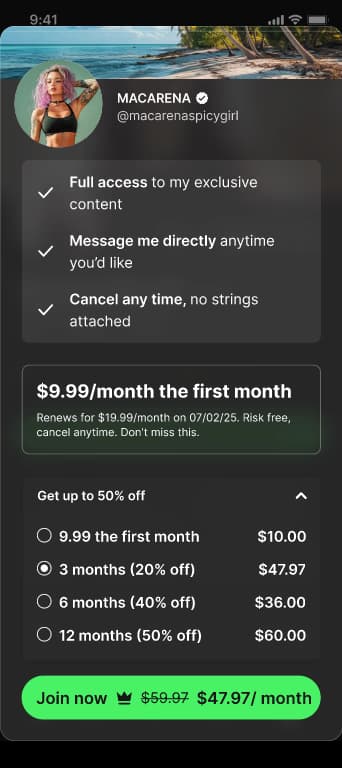
- No negative impact on overall subscription conversion.
- Shifted a significant share of users toward higher-value plans.
Context
Bundles existed but were only surfaced after the subscribe decision. Most users never compared them to the base subscription.
Hypothesis
If bundles appear inside the subscribe dialog, users will consider higher-value options at the moment of intent.
Change
Bundles are now shown first in the subscription dialog, instead of on the creator profile page after subscription.
Why it mattered
Value discovery met user intent in one decision moment. The lift came from fixing when bundles were shown, not how.
Enhanced Subscription Dialog (Hierarchy & Bundles)
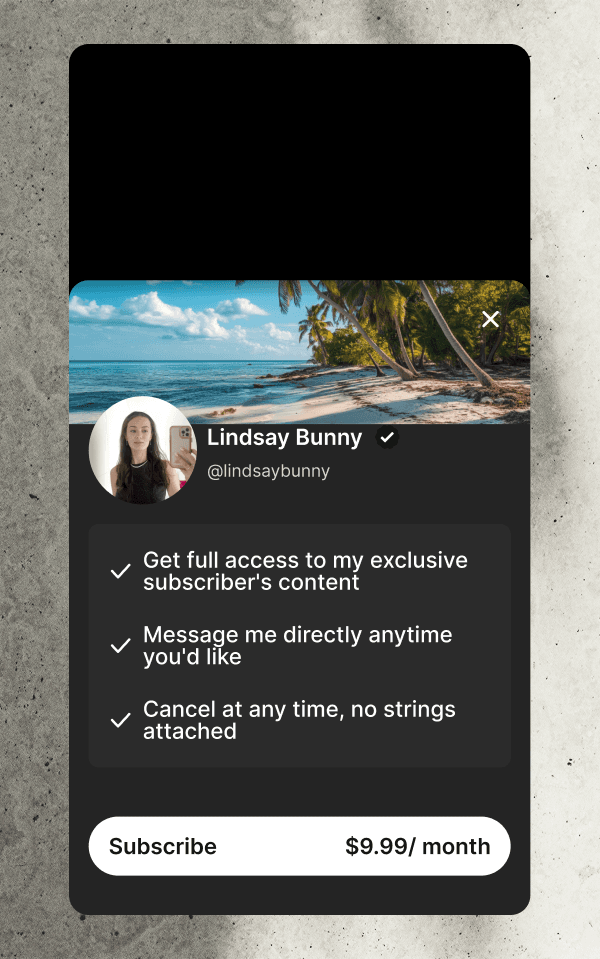
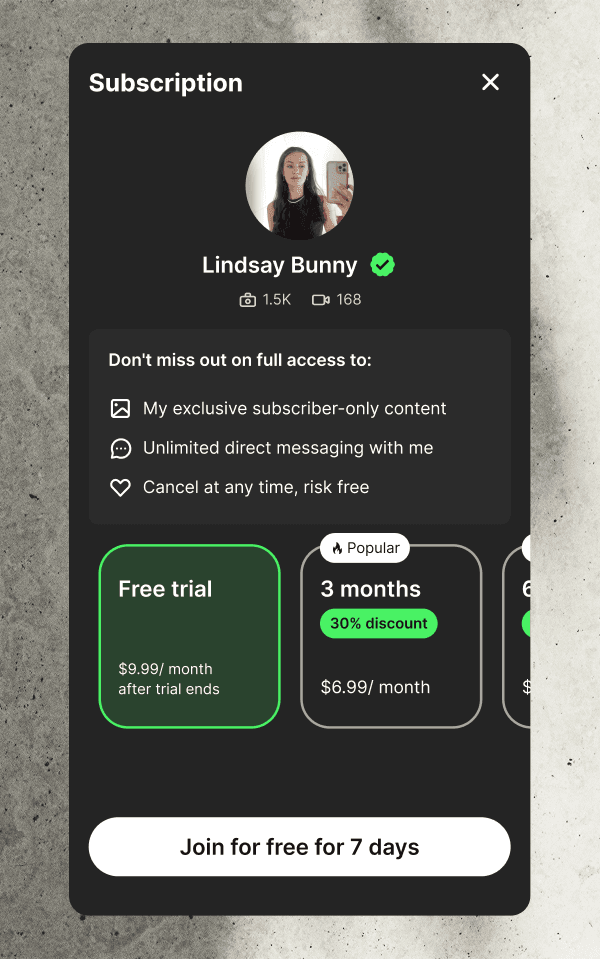
Context
The subscription dialog caused hesitation at the decision moment due to weak visual hierarchy and unclear option comparison.
Hypothesis
If the dialog improves hierarchy and option framing, users commit more confidently.
Change
- Clearer layout and typographic hierarchy
- Stronger emphasis on commitment options (bundles)
- More polished visual treatment aligned with creator value
This experiment focused on how choices were presented, not when they were introduced.
Why it mattered
This proved that clarity and framing, not price, were the primary conversion blockers, unlocking revenue without increasing discounts or complexity.
Rebrand Tips to Gifts
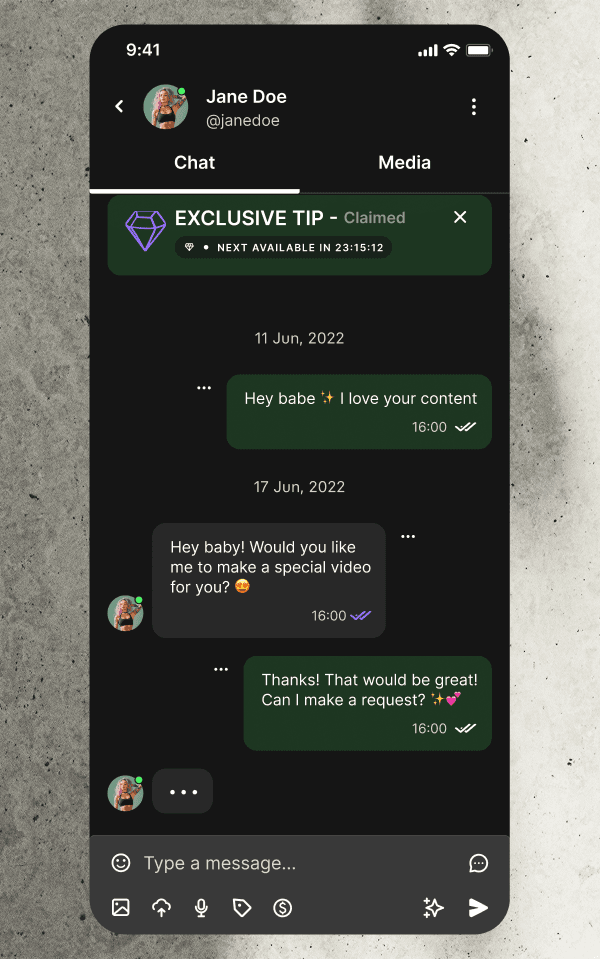
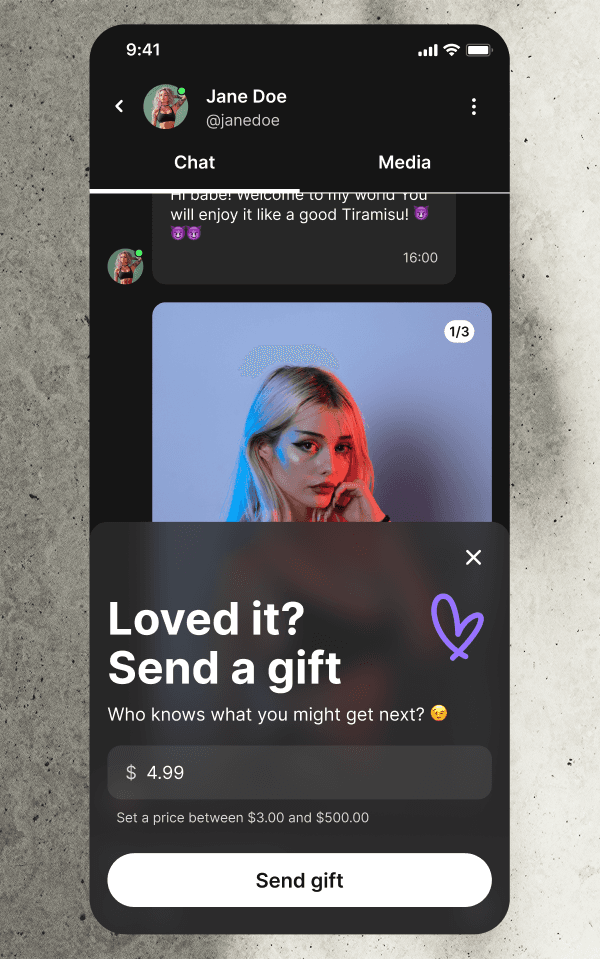
- Slight decrease in number of tips, offset by higher average value.
Context
Tipping creators was framed as a transactional action, which limited emotional engagement and average spend.
Hypothesis
If tipping is reframed as gifting, users tie the action to emotional value, not payment. Revenue rises even if frequency drops.
Change
- Rebranded tips as gifts across chat and post surfaces
- Introduced more expressive, value-forward language
- Shifted emphasis from transaction to appreciation
Why it mattered
By changing how users emotionally perceived the action, we increased revenue without adding friction or pushing more prompts.
Redesigned the site, grew the audience
Go to case study →